
BECC(U)S in the exploration of future energy systems | prior work – ISPT
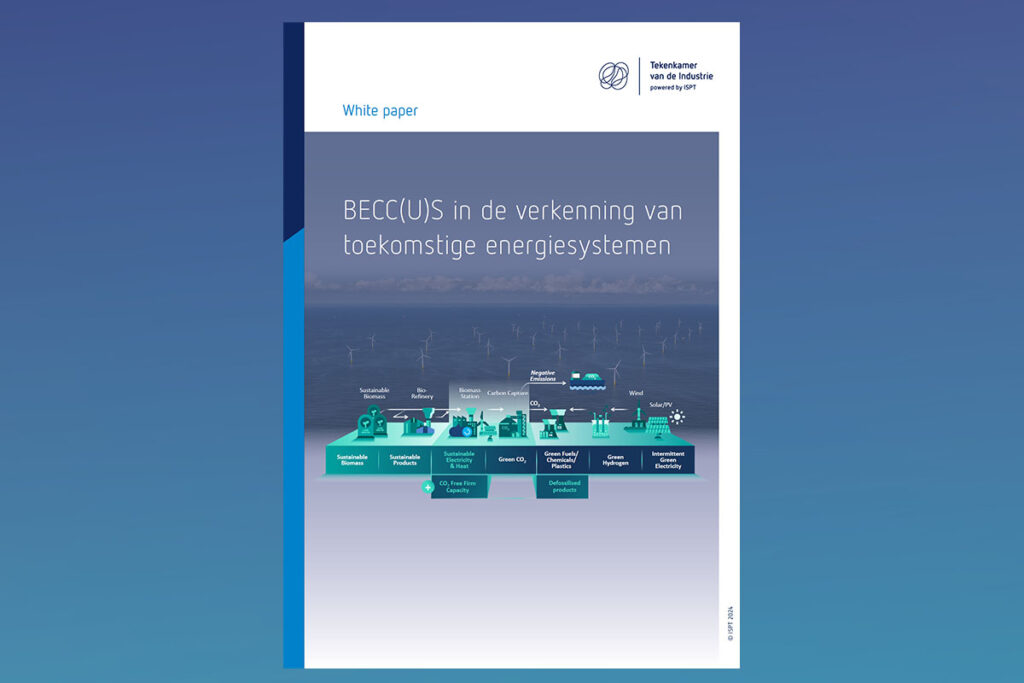
Problem Statement
Net-zero targets require negative emissions to compensate for residual greenhouse gas output. Bio-energy with carbon capture, use and storage (BECCUS) offers a route to large-scale removal of biogenic CO₂. Yet an objective, accessible method to calculate the system-level impact of BECCUS was missing.
Observations
Observation A: Negative emissions are not optional. Reaching net-zero without negative emissions requires eliminating every last source of greenhouse gas, which is technically and economically implausible for several industrial sectors. BECCUS fills a structural gap in the pathway.
Observation B: System-level analysis was inaccessible. BECCUS impacts ripple through the energy system: biomass supply, power generation, heat networks, CO₂ transport and storage. Without an integrated model, stakeholders relied on fragmented or proprietary analyses.
Observation C: Open-source modelling enables shared understanding. By implementing BECCUS in the freely accessible Energy Transition Model, the project removed barriers to independent analysis. Any stakeholder can now explore BECCUS contributions under their own assumptions.
Conclusion
BECCUS is a system intervention, not a standalone technology. Its contribution depends on how it interacts with the broader energy system. Making that analysis open and reproducible is essential for informed decision-making.
Scope
Energy system modelling and negative emissions
Specifications
White paper, ETM module implementation
- Visit project page (ISTP, Dutch)