
A one-gigawatt green-hydrogen plant | prior work – ISPT
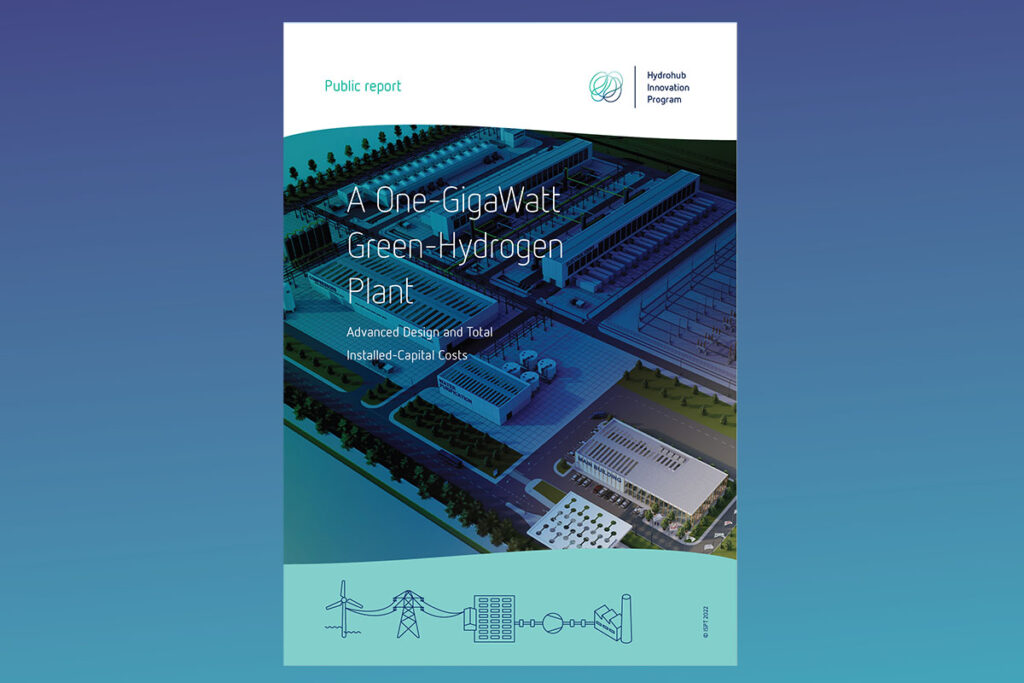
Problem Statement
Around 2018, everyone in the hydrogen world was talking about gigawatt-scale electrolysis, but the largest operating plants were at 10 MW. A hundred-fold scale-up was needed, and no publicly available reference existed with a complete scope and total-installed-cost estimate for such a plant.
Observations
Observation A: Scale changes the cost structure. At gigawatt scale, balance of plant, power electronics, and utilities are equally important cost drivers as the electrolyser stacks themselves. Cost reduction requires innovation across all areas, not just in stack technology.
Observation B: The advanced design halves capital costs. From the 2020 baseline of 1400 €/kW, the advanced 2030 design reaches 730 €/kW for alkaline and 830 €/kW for PEM technology. This is a major step, but not yet competitive without subsidies.
Observation C: A gigawatt electrolyser is a system, not a device. Integration with offshore wind, hydrogen pipelines, storage, flexible operation, oxygen offtake, and heat recovery defines whether the plant works as part of an industrial cluster.
Conclusion
This project delivered the first publicly available reference design for a gigawatt-scale green-hydrogen plant with complete scope and total installed costs. It provided the shared basis for infrastructure planning and investment decisions across the Netherlands.
Scope
Electrolyser system design and industrial integration
Specifications
3 reports: system integration, basic design (2020), advanced design (2030)